

Medical Tapes Market Analysis & Forecast: 2026-2033
Medical Tapes Market is estimated to be valued at USD 2,017.1 Mn in 2026 and is expected to reach USD 2,672.3 Mn in 2033, exhibiting a compound annual growth rate (CAGR) of 4.1% from 2026 to 2033.
Key Takeaways
- Based on Product Type, the Adhesive Tapes segment is expected to lead with 36% share in 2026, due to their versatility, strong adhesion, and broad clinical use.
- Based on Application, the Surgeries and Securement segment is expected to hold the largest share of the market in 2026, due to rising procedures and the need for reliable device fixation.
- Based on End User, the Hospitals segment is projected account for the highest share of the market in 2026, driven by high patient volumes and stringent clinical care protocols.
- Based on Region, North America is set to lead the global medical tapes market with 47.5% share in 2026. While, Asia Pacific is anticipated to be the fastest growing region.
Market Overview
Medical Tapes Market demand is rising steadily due to increasing surgical procedures, wound care needs, and chronic conditions requiring long-term dressing solutions. Hospitals, clinics, and home care settings are driving adoption of advanced tapes like silicone, paper, and breathable non-woven variants. Innovations in skin-friendly adhesives and waterproof materials are enhancing patient comfort and treatment outcomes. Additionally, the growing elderly population and awareness of infection control are fueling demand across developed and emerging regions. The market is evolving with a focus on durability, ease of use, and compatibility with modern medical devices.
Current Events and their Impact on the Medical Tapes Market
Current Event | Description and its Impact |
Regulatory Fragmentation and Compliance Cost Acceleration |
|
Demographic Shift Driving Chronic Disease Management and Home-Based Care Expansion |
|
End-User Feedback and Unmet Needs in the Medical Tapes Market
End-User Feedback
- Positive Aspects
- Strong adhesion and durability appreciated in surgical and trauma care.
- Skin-friendly options like silicone tapes praised for use on sensitive or aging skin.
- Easy-to-tear designs valued by nurses and caregivers for quick application.
- Common Complaints
- Skin irritation and allergic reactions from synthetic adhesives.
- Painful removal causing skin damage, especially in pediatric and geriatric patients.
- Poor adhesion in humid or sweaty conditions, leading to dressing failure.
Unmet Needs
- Gentle Adhesion for Fragile Skin
- Need for tapes that minimize trauma during removal, especially for elderly, neonatal, and burn patients.
- Moisture-Resistant and Breathable Materials
- Tapes that perform well in high-humidity environments or during long wear without compromising skin health.
- Eco-Friendly and Biodegradable Options
- Rising demand for sustainable materials that reduce medical waste and meet environmental regulations.
- Smart Adhesive Technologies
- Integration of sensors or drug-delivery capabilities for advanced wound monitoring and treatment.
- Cost-Effective Solutions for Low-Resource Settings
- Affordable tapes with reliable performance for clinics and hospitals in developing regions.
- Current Industry Events of 2026
- Market Size Estimation
- Regional Breakdown
- Competitive Landscape
- Customer Intelligence
- Segmental Analysis
- Pricing Analysis
- Key Market Drivers, Challenges & Future Trends
- Customized Insights Section
Segmental Insights
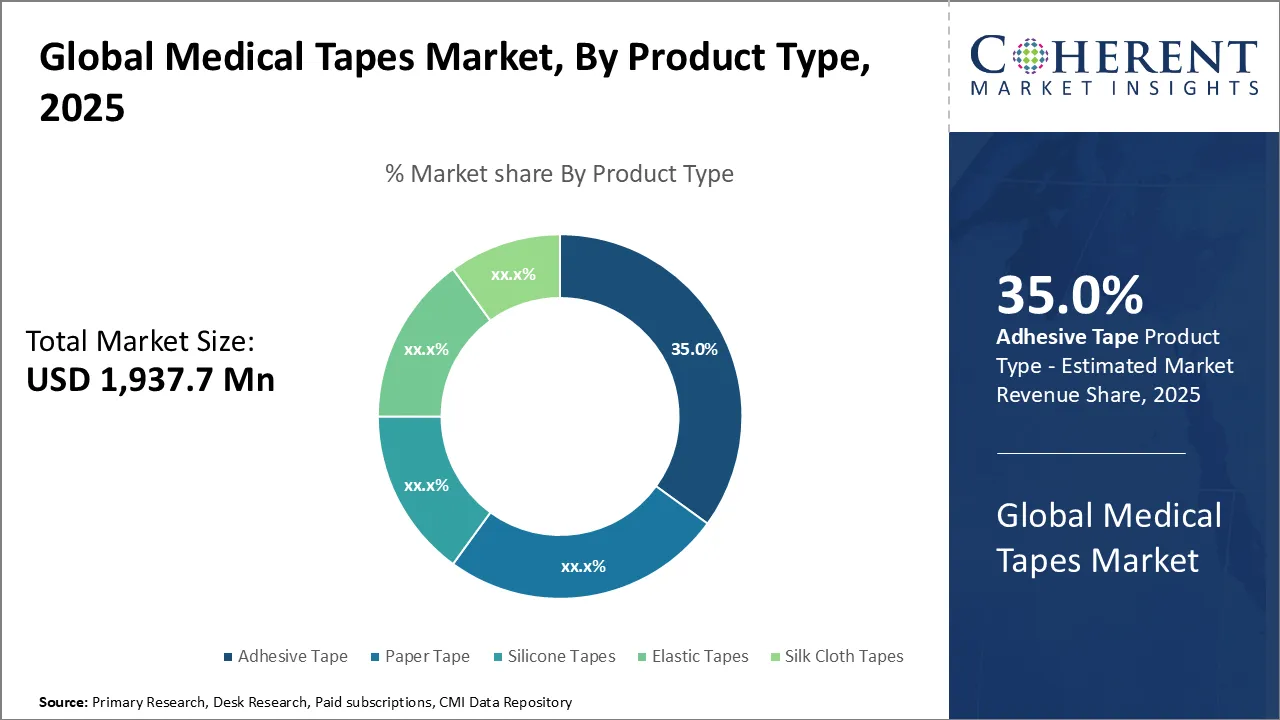
Medical Tapes Market Insights, By Product Type: Adhesive tapes Lead Is Due to Their Versatility, Strong Adhesion, And Broad Clinical Use
In terms of product type, the adhesive tapes segment is expected to hold 36% share of the market in 2026, due to their versatility, strong bonding capabilities, and wide range of clinical applications. These tapes are essential for securing dressings, catheters, and medical devices, offering reliable adhesion across various skin types and conditions. Advances in adhesive technology have led to improved skin-friendliness, breathability, and moisture resistance, making them suitable for both short-term and extended wear. Their compatibility with sterilization processes and ease of use in surgical, emergency, and outpatient settings further boosts their adoption. As healthcare systems prioritize efficiency and patient comfort, adhesive tapes remain the preferred choice across hospitals, clinics, and home care environments.
For instance, in January 2025, H.B. Fuller unveiled a new bio-compatible adhesive designed for medical applications. Engineered for safety and skin compatibility, the adhesive supports advanced wound care, surgical securement, and wearable medical devices. This innovation reflects growing demand for high-performance, patient-friendly materials in the medical tapes market, enhancing comfort and clinical outcomes.
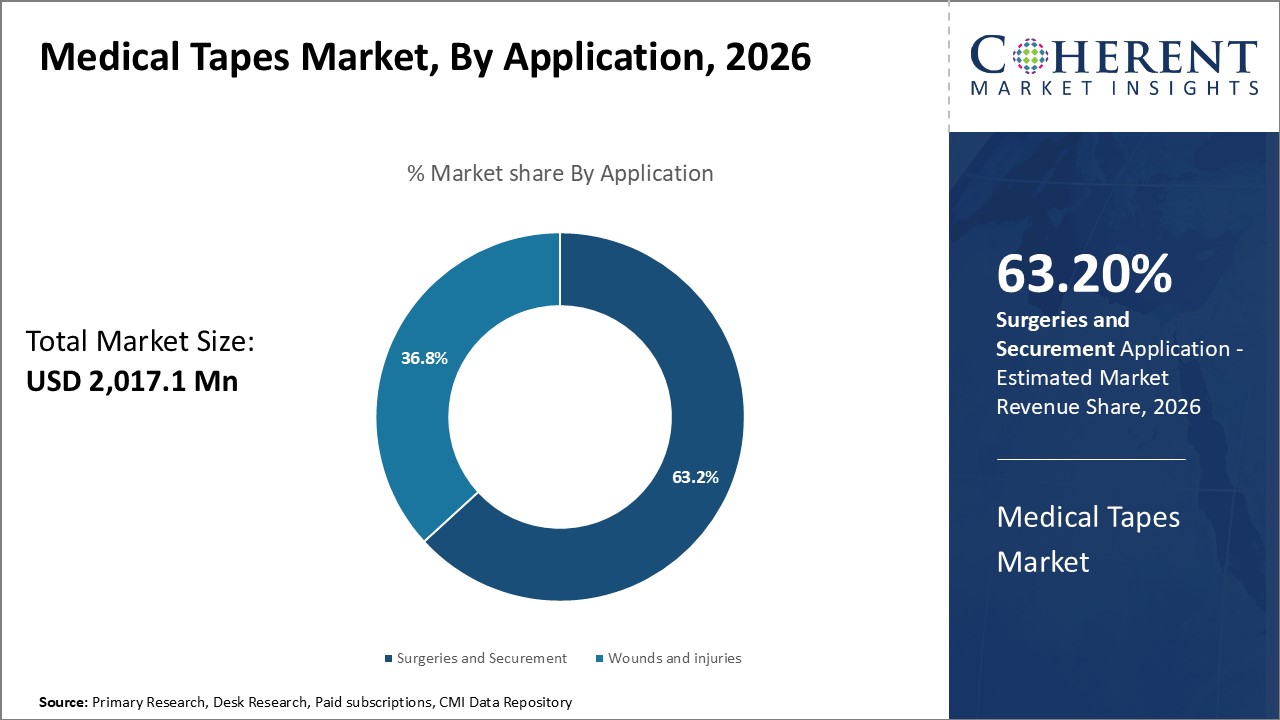
Medical Tapes Market Insights, By Application: Surgeries and Securement Lead Is Due to Rising Procedures and the Need for Reliable Device Fixation
In terms of application, the surgeries and securement segment is expected to hold the largest share of the market in 2026. This growth is fueled by the rising number of surgical procedures globally, including both inpatient and outpatient operations. Medical tapes are essential for securing dressings, catheters, IV lines, and other devices during and after surgery. The segment benefits significantly from advancements in adhesive technologies that offer stronger bonding, improved moisture resistance, and better skin compatibility. These innovations ensure reliable performance in high-stress clinical environments, reducing the risk of device displacement and enhancing patient safety.
For instance, in October 2025, Guanma Medical highlights surgical paper tape as a transformative solution in wound management. This innovative product acts like a smart adhesive, nanofiber reinforcement, and biomimetic designs that enhance skin compatibility and securement. These advancements position surgical paper tape as a key player in post-operative care, offering improved breathability, comfort, and healing support for sensitive skin.
Medical Tapes Market Insights, By End User: Hospitals Dominance Is Driven by High Patient Volumes and Stringent Clinical Care Protocols
In terms of end user, the Hospitals segment is projected to account for the highest share of the market in 2026, due to their high patient turnover and extensive use of medical tapes across departments. From emergency rooms to operating theaters and post-operative wards, hospitals rely on tapes for wound care, surgical securement, and infection control. The demand is further amplified by the need for sterile, durable, and easy-to-use products that meet regulatory standards. Hospitals also drive innovation adoption, favoring tapes with advanced features like breathable materials, antimicrobial coatings, and skin-friendly adhesives to improve patient outcomes and operational efficiency.
For instance, in June 2025, Mount Sinai dermatologists are using tape strips to non-invasively map immune changes in common skin diseases. This innovative technique, applied in hospital research settings, enables cellular and molecular analysis without biopsies. The approach highlights the expanding role of medical tapes in diagnostics, offering a safer, patient-friendly method for studying inflammatory skin conditions.
Regional Insights
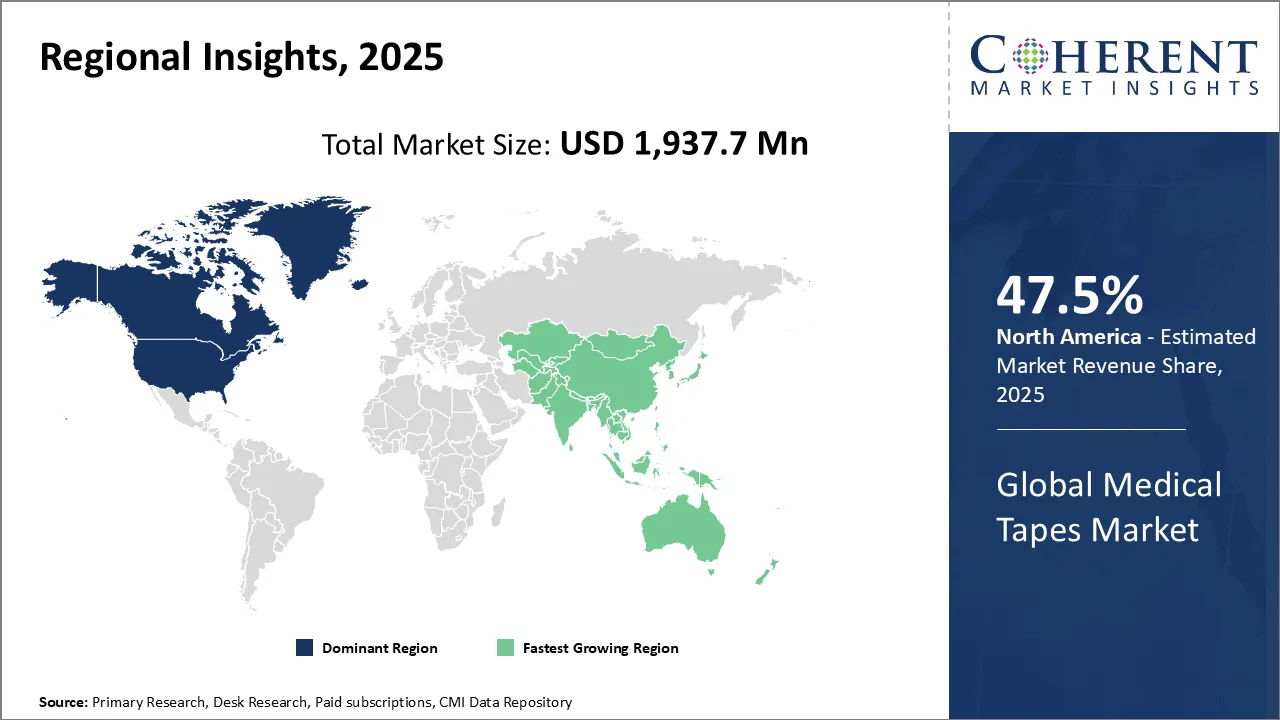
North America Medical Tapes Market Analysis & Trends
North America, holding 47.5% share in the medical tapes market, is expected to dominate in 2026, due to advanced healthcare infrastructure, high surgical volumes, and rising chronic conditions. Increased adoption of innovative, skin-friendly adhesives and growing home care services further fuel market growth. Regulatory support and investment in medical technology also drive demand across hospitals and outpatient settings.
For instance, in January 2026, Blueshift introduced AeroZero, a lightweight, thin thermal protection tape designed to enhance safety in medical devices. Engineered in the U.S., the tape offers high thermal resistance and insulation, supporting device performance and patient safety. Its advanced material properties make it ideal for compact medical technologies requiring reliable heat management and structural integrity.
Asia Pacific Medical Tapes Market Analysis & Trends
Asia Pacific is projected to exhibit the fastest growth of the market, due to expanding healthcare infrastructure, increasing surgical procedures, and a growing aging population. Rapid urbanization, higher healthcare spending, and greater awareness of wound care and infection control drive adoption. Local manufacturing and government initiatives also support market growth across emerging economies.
For instance, in August 2026, Carestone Medical launched X-ray detectable thread and tape to enhance surgical safety. Designed for visibility under imaging, these products help prevent retained surgical items and support compliance with operating room protocols. The innovation aims to improve patient outcomes and reduce risks during procedures, reinforcing Carestone’s commitment to advanced surgical solutions.
Medical Tapes Market Outlook Country-Wise
The U.S. Medical Tapes Market Trends
The U.S. medical tapes market is growing due to a rise in surgical procedures, chronic wounds, and aging population needs. Hospitals and home care settings increasingly rely on tapes for wound care, securement, and post-operative recovery. Demand for advanced, skin-friendly, and breathable materials also drives innovation and market expansion.
For instance, in November 2024, BioCircuit Technologies received a $3 million NIH award to advance its Nerve Tape® technology, a sutureless solution for peripheral nerve repair. Designed to wrap and secure severed nerves with minimal trauma, the biocompatible tape aims to improve surgical outcomes and reduce procedure time. The funding supports clinical translation and commercialization in the U.S. medical sector.
China Medical Tapes Market Trends
China’s medical tapes market is expanding due to rising surgical procedures, aging population, and demand for skin-friendly materials. Growth in minimally invasive treatments, ostomy care, and home healthcare drives the need for advanced adhesive solutions. Technological innovations and increased healthcare spending further boost market demand.
For instance, in July 2026, Ehefluo introduced advanced fluoropolymer film materials tailored for medical adhesive tapes. These films offer superior biocompatibility, chemical resistance, and durability, enhancing performance in wound care, surgical applications, and wearable devices. The innovation supports safer, more effective healthcare solutions and reflects Ehefluo’s commitment to high-performance materials from its base in China.
Market Report Scope
Global Medical Tapes Market Report Coverage
| Report Coverage | Details | ||
|---|---|---|---|
| Base Year: | 2025 | Market Size in 2026: | USD 2,017.1 Mn |
| Historical Data for: | 2020 To 2024 | Forecast Period: | 2026 To 2033 |
| Forecast Period 2026 to 2033 CAGR: | 4.1% | 2033 Value Projection: | USD 2,672.3 Mn |
| Geographies covered: |
| ||
| Segments covered: |
| ||
| Companies covered: | 3M, Johnson & Johnson Services, Inc., Paul Hartmann AG, Scapa Group Ltd (Acquired by Mativ), Milliken, ATL Corp., Medtronic, Medline Industries, LP, Cardinal Health, Smith+Nephew, and McKesson Corporation | ||
| Growth Drivers: |
| ||
| Restraints & Challenges: |
| ||
Global Medical Tapes Market Drivers
Increasing Incidence of Road Accidents
The rising incidence of road accidents in China significantly contributes to the growth of the medical tapes market size. Accident victims often require immediate wound care, surgical interventions, and trauma management, all of which rely heavily on medical adhesive tapes for dressing securement, IV stabilization, and post-operative care. As emergency and orthopedic procedures increase, hospitals and clinics demand more advanced, skin-friendly, and durable tape solutions. This surge in usage, combined with expanding healthcare infrastructure and awareness of patient safety, drives innovation and boosts the overall market size for medical tapes in China’s fast-evolving healthcare landscape.
Increasing Cases of Injuries
The increasing cases of injuries worldwide, due to road accidents, workplace hazards, natural disasters, and sports activities are fueling medical tapes market growth globally. These injuries often require immediate wound care, surgical procedures, and post-operative support, where medical tapes play a critical role in dressing securement and device stabilization. Rising healthcare awareness, expanding emergency services, and demand for advanced adhesive technologies are driving innovation and boosting market size. Additionally, the growth of home healthcare and aging populations further amplifies the need for reliable, skin-friendly medical tapes across hospitals, clinics, and personal care settings around the world.
Global Medical Tapes Market: Key Trends
Rising Demand for Silicone Tapes
The rising demand for silicone tapes is significantly influencing the medical tapes market price globally. Silicone tapes offer superior skin adhesion, breathability, and gentle removal, making them ideal for sensitive skin, pediatric care, and long-term wear. As healthcare providers prioritize patient comfort and advanced wound care, silicone-based products are gaining traction. Their premium quality and specialized applications often command higher prices, contributing to the overall increase in market value. Additionally, growing awareness of skin-friendly materials and innovations in adhesive technology are driving demand, pushing manufacturers to expand offerings and invest in silicone tape production, thereby impacting market pricing dynamics.
Increasing Cases of fall
The increasing cases of falls, especially among the elderly and in occupational settings are significantly impacting medical tapes market research. Falls often result in fractures, lacerations, and surgical interventions that require wound care and securement solutions. Medical tapes are essential for dressing stabilization, catheter fixation, and post-operative recovery. As fall-related injuries rise globally, healthcare providers demand more advanced, skin-friendly, and durable adhesive products. This trend is driving research into innovative materials and application techniques, fueling the development of next-generation medical tapes. Consequently, the growing incidence of falls is a key factor shaping the direction and scope of medical tapes market research.
Medical Tapes Market Opportunists
Biodegradable and sustainable materials
The development of biodegradable and sustainable materials is reshaping the medical tapes market forecast for 2025 and beyond. As environmental regulations tighten and consumer demand for eco-friendly healthcare products grows, manufacturers are investing in tapes made from renewable, non-toxic components. These innovations reduce medical waste and support hospital sustainability goals. Biodegradable tapes offer comparable performance to traditional adhesives while aligning with global green initiatives. This shift is expected to drive market growth, especially in regions with strong environmental policies. As a result, the medical tapes market is forecasted to expand with a focus on sustainability, innovation, and regulatory compliance.
Key Developments
- In November 2024, VCU Health surgeons introduced QuickStick, a groundbreaking medical adhesive tape now used in top operating rooms across the U.S. Designed for rapid application and secure adhesion, QuickStick enhances surgical efficiency and patient care. This innovation reflects growing demand for advanced medical tapes and highlights VCU Health’s role in driving healthcare innovation.
- In December 2024, Ahlstrom has introduced a fiber-based transparent tape backing designed to reduce plastic use in adhesive tapes. This innovative material supports sustainability across medical and industrial applications, offering a renewable alternative to traditional plastic-based backings. The launch reinforces Ahlstrom’s commitment to eco-friendly solutions in healthcare and packaging sectors, with global relevance from its European base.
Analyst Opinion (Expert Opinion)
The medical tapes market value is undergoing a structural shift from commoditized pricing to clinically validated adhesive technologies. Silicone-based low-trauma adhesives are rapidly becoming the clinical standard, as evidence demonstrates they cause significantly less skin disruption than acrylate tapes, driving their inclusion in hospital tenders for fragile populations. At the same time, extended-wear adhesives are moving from novelty to necessity, with leading suppliers such as 3M and Lohmann offering validated wear-time claims of 21–28 days for continuous glucose monitors and cardiac patches. This transition elevates adhesive selection to a strategic systems decision for OEMs, influencing device reliability and patient adherence.
Regulatory compliance, ISO 10993 biocompatibility, and proven wear performance are now decisive procurement factors, effectively excluding suppliers lacking validated data. Competitive advantage increasingly depends on co-development partnerships between adhesive manufacturers and device firms, enabling customization and early validation. While silicone dominates in low-trauma use, acrylates retain advantages in high-load fixation, ensuring multi-chemistry portfolios remain essential. Sustainability initiatives are rising but limited by strict biocompatibility requirements. Overall, the market’s direction is clear: adhesives are no longer disposable accessories but regulated, performance-critical components. Companies combining clinical validation, technical depth, and OEM collaboration will secure durable competitive positioning.
Speak to the analyst
Want personalized insights?
Take the findings above to one of our principal consultants, or have the report rebuilt around the segments, geographies and competitors you actually track.
Market Segmentation
- Global Medical Tapes Market, By Product Type (Revenue, USD Mn, 2021 - 2033)
- Adhesive Tape
- Elastic Tapes
- Silicone Tapes
- Paper Tape
- Silk Cloth Tape
- Global Medical Tapes Market, By Application (Revenue, USD Mn, 2021 - 2033)
- Wounds and Injuries
- Surgeries and Securement
- Global Medical Tapes Market, By End User (Revenue, USD Mn, 2021 - 2033)
- Hospitals
- Ambulatory Surgical Centers
- Clinics
- Home Care Settings
- Global Medical Tapes Market, By Region (Revenue, USD Mn, 2021 - 2033)
- North America
- U.S.
- Canada
- Latin America
- Brazil
- Mexico
- Argentina
- Rest of Latin America
- Europe
- Germany
- U.K.
- France
- Italy
- Spain
- Russia
- Rest of Europe
- Asia Pacific
- China
- India
- Japan
- Australia
- South Korea
- ASEAN
- Rest of Asia Pacific
- Middle East
- GCC
- Israel
- Rest of Middle East
- Africa
- South Africa
- Central Africa
- North Africa
- North America
- Company Profiles
- 3M
- Johnson & Johnson Services, Inc.
- Paul Hartmann AG
- Scapa Group Ltd (Acquired by Mativ)
- Milliken
- ATL Corp.
- Medtronic
- Medline Industries, LP
- Cardinal Health
- Smith+Nephew
- McKesson Corporation
Sources
Primary Research Interviews from the following stakeholders
Stakeholders
- Interviews with medical tape manufacturers, adhesive technologists, hospital procurement managers, wound care specialists, biomedical engineers, and distributors across leading healthcare markets.
Specific stakeholders
- Product development heads and R&D scientists at leading medical tape producers (e.g., 3M Health Care, Johnson & Johnson, Smith & Nephew, Avery Dennison Medical)
- Procurement managers and wound management specialists at hospitals, clinics, and ambulatory surgical centers
- Biomedical engineers and adhesive formulation experts involved in skin-friendly and hypoallergenic tape innovations
- Category heads at retail pharmacy chains and e-commerce health platforms (e.g., Walgreens, Boots, Apollo Pharmacy, Amazon Health)
- Regulatory and compliance officers at medical device authorities and national standardization bodies
- Distributors and importers of surgical consumables and wound care products in Asia Pacific, North America, and Europe
Databases
- World Health Organization (WHO) Global Health Observatory
- United Nations Comtrade Database
- U.S. Food and Drug Administration (FDA) Medical Device Database
- European Medicines Agency (EMA) Database
- Central Drugs Standard Control Organization (CDSCO), India
- Health Canada – Medical Devices Active Licence Listing (MDALL)
- Japan Pharmaceuticals and Medical Devices Agency (PMDA)
- National Medical Products Administration (NMPA), China
- World Bank Health Expenditure Data
- OECD Health Statistics
Magazines
- Medical Device and Diagnostic Industry (MD+DI)
- Medical Product Outsourcing (MPO)
- Healthcare Packaging
- Wound Care Today
- Materials World (Institute of Materials, Minerals & Mining)
- Adhesives & Sealants Industry (ASI) Magazine
- Plastics News – Medical Applications Section
- Medical Design & Outsourcing
Journals
- Journal of Wound Care
- International Wound Journal
- Journal of Biomedical Materials Research
- Advanced Healthcare Materials (Wiley)
- Journal of Adhesion Science and Technology
- Biomedical Engineering Online
- Materials Science & Engineering: C
- Regulatory Toxicology and Pharmacology
Newspapers
- The Wall Street Journal – Healthcare & Pharmaceuticals
- The Economic Times – Healthcare & Life Sciences
- The Hindu Business Line – Medical Devices
- Financial Times – Health & Manufacturing
- Nikkei Asia – MedTech and Manufacturing
- South China Morning Post – HealthTech and Exports
Associations
- Association for the Advancement of Wound Care (AAWC)
- European Wound Management Association (EWMA)
- Adhesive and Sealant Council (ASC)
- Medical Device Manufacturers Association (MDMA)
- Advanced Medical Technology Association (AdvaMed)
- Biomedical Engineering Society (BMES)
- Indian Medical Device Industry Association (AiMeD)
- American Society for Testing and Materials (ASTM) – Medical Adhesives Committee
Public Domain Sources
- World Health Organization (WHO) – Medical Consumables Reports
- U.S. Food and Drug Administration (FDA) – Device Classification Database
- European Commission – Medical Device Regulation (MDR) Portal
- Ministry of Health, Labour and Welfare (MHLW), Japan
- National Health Service (NHS) Supply Chain Data
- Ministry of Health and Family Welfare (Government of India)
- U.S. National Institutes of Health (NIH) – Biomedical Materials Division
- Department of Pharmaceuticals (India) – Medical Devices Division
- Health and Safety Executive (HSE), UK
- National Institute for Health and Care Excellence (NICE), UK
Proprietary Elements
- CMI Data Analytics Tool
- Proprietary CMI Existing Repository of information for last 8 years
Definition - A medical tape is an adhesive tape that is specifically designed to be used directly on the skin to hold wound bandages or other first aid or medical appliances in place. It needs to be skin safe, easy-to-use, and strong enough to work well when skin is moving, bending, or damp. Medical tapes can be used directly on the skin for supporting the placement of bandages, tubes, or other medical devices. Facestocks for medical tapes include paper, plastics, foams, or various fabrics. Three of the most commonly used medical tapes are paper, transparent, and cloth. Other types of medical tapes include retention tapes, waterproof tapes, and silicone tapes.
Get access to 250+ pages report
Every segment, forecast, competitor profile and data table behind the analysis above — available for instant download.
- ESOMAR Member
- ISO 9001:2015 Certified
- D-U-N-S Registered
- GDPR & CCPA Compliant
Missing comfort of reading report in your local language? Find your preferred language:
Transform your Strategy with Exclusive Trending Reports
Frequently Asked Questions
The Medical Tapes Market is estimated to be valued at USD 2,017.1 Mn in 2026, and is expected to reach USD 2,672.3 Mn by 2033.
The CAGR of the Medical Tapes Market is projected to be 4.1% from 2026 to 2033.
Increasing incidences of road accidents and rising cases of injuries are expected to drive the market growth.
Adhesive tapes segment is the leading segment in the market.
The availability of advanced wound care products is expected to hinder the market growth over the forecast period.
The major players operating in the market include 3M, Johnson & Johnson Services, Inc., Paul Hartmann AG, Scapa Group Ltd (Acquired by Mativ), Milliken, ATL Corp., Medtronic, Medline Industries, LP, Cardinal Health, Smith+Nephew, and McKesson Corporation.